After 3 years of community projects aiming to connect people with nature through art in Scarborough, the Wild Eye project culminates with the opening of the Scarborough Wildlife Viewing Station on Marine Drive and the unveiling of a unique artwork that even surprised its creator. Yorkshire Wildlife Trust’s Telling Our Stories volunteer, Howard Robbie, was keen to see the finished artwork, “Roman Mosaic c.2025” in its natural environment…
A place for nature
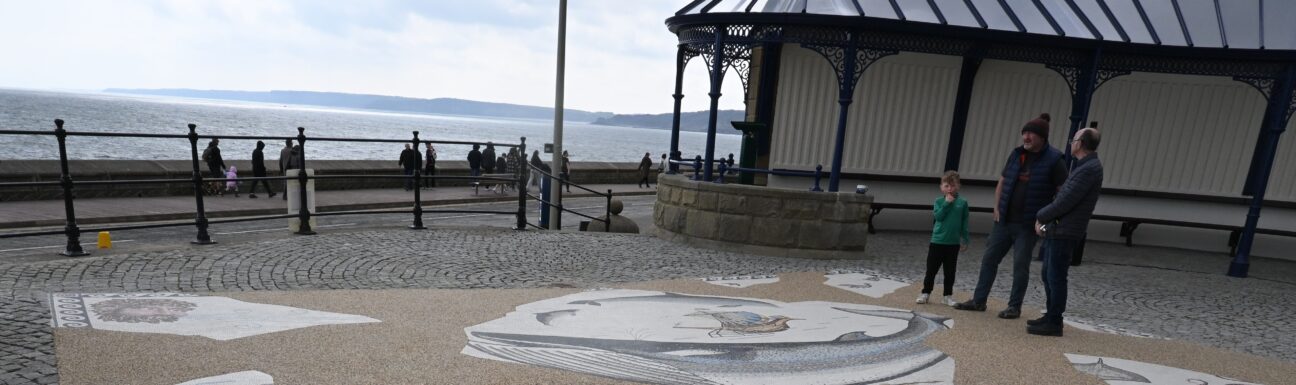
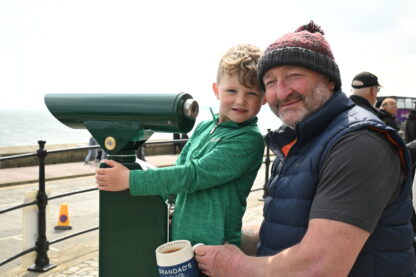
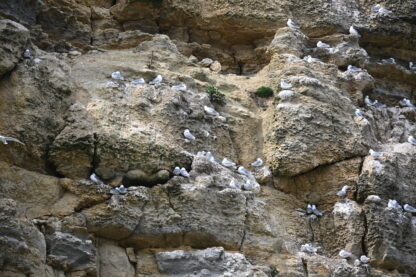
For many years the shelter on Marine Drive has stood unloved and without real purpose. It’s in a prime position, just beyond the harbour where a bobbing haul of traditional fishing boats and gnarly lobster pots mixes with the ping of penny slots and fish and chip parlours once frequented by the likes of Errol Flynn. As you walk out under the turret that marks Pigeon Bath Corner, the town is left abruptly behind as the sea opens out on one side and cliffs whitened by kittiwakes form a wall on the other. Just under this cliff sits the old shelter. It’s a modest but welcoming building now with its newly painted ironwork and spruced up roof windows, starting a new life as a pavilion from which to spot cetaceans with an array of telescopes and a raised position above the road. It’s the perfect place to sit and view the bay, whether you spot a dolphin or not.
A place for art
Should you take your eyes off the view and look down, you’ll see a huge partial mosaic depicting Scarborough’s wildlife. This was created by Turner Prize winning artist Jeremy Deller and realised by Sculptor Coralie Turpin who specialises in Mosaic.
Jeremy and Coralie didn’t just collaborate with each other on this. They talked to scientists and local conservationists as well as running workshops in local schools, making mosaics, building connections to nature within the local community and getting inspiration for the artwork. Getting people involved in nature through art is a key part of what Wild Eye has been doing in Scarborough.

A time for art
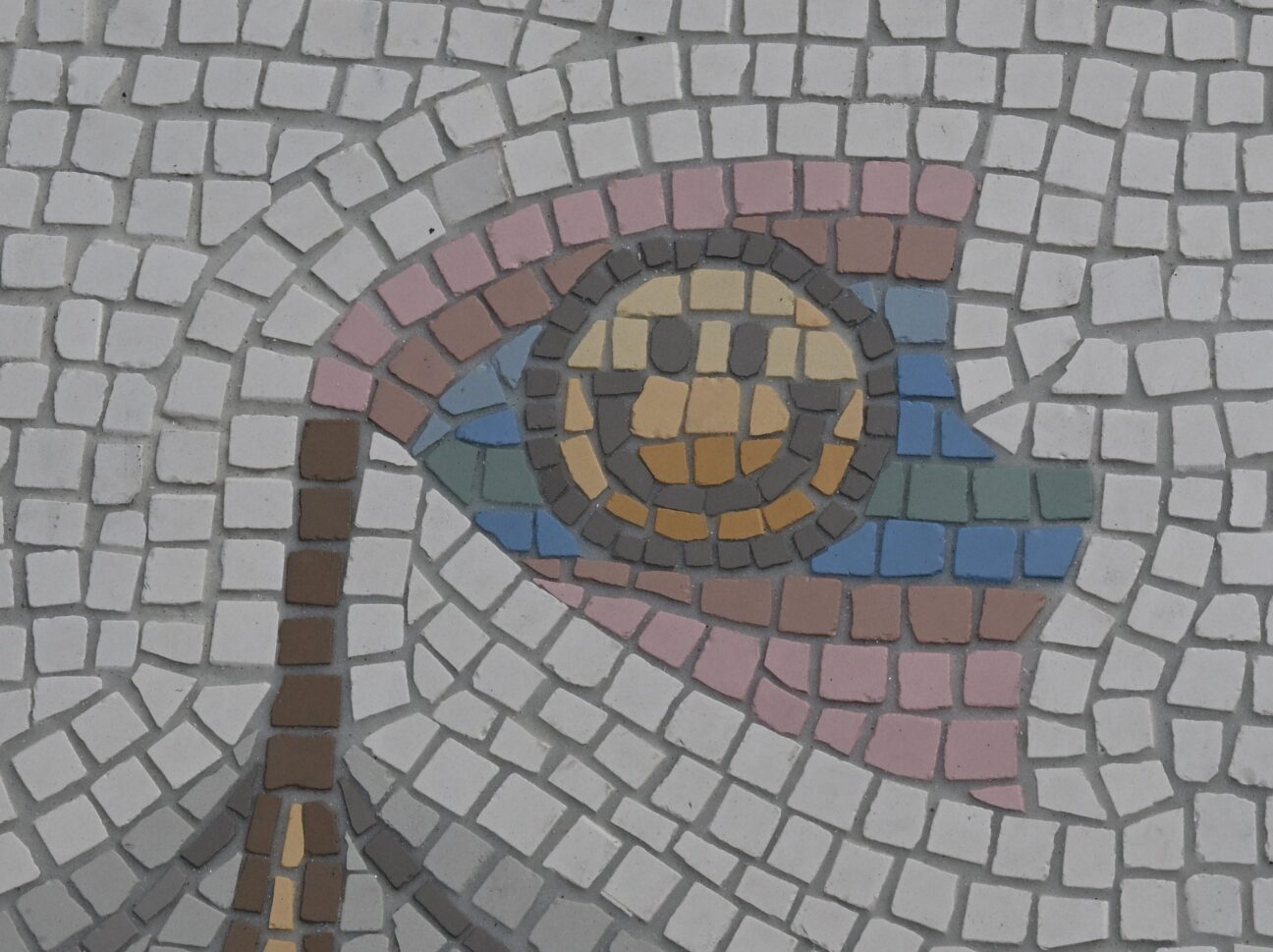
The artwork, simply titled “Roman Mosaic c. 2025” is designed as a Roman Mosaic that’s been uncovered after centuries of neglect. Whilst you might think it unlikely to find a Roman mosaic in Scarborough, the Romans were in Scarborough, they did look out to sea and they did depict sea life in their mosaics. In 2,000 years, will people think it really is Roman? Well, there are some clues that maybe it isn’t, but by that time, will our descendants get the references? Especially when that reference also points to “Acid Brass”, an earlier work of Jeremy’s as shown in the mosaic photo below.
The size of nature
As it is designed as though it has been uncovered, there are gaps you have to fill with your imagination. The first thing you notice is the scale. Even Jeremy Deller himself said he was surprised at the size when he first saw the completed work. Jeremy doesn’t claim to have the skills needed to build the mosaic, but Coralie Turpin does. She cut the coloured tiles to specific sizes and shapes to fit the drawing. Some of the large white areas were filled in by a team, a little more randomly, just as it would have been done in Roman times. There were more than a quarter of a million tiles to place and grout. Think of this next time you’re tiling the bathroom. I’m not going to show the whole work here, you should go and see it yourself.

Unexpected Art
People who just turn up, not knowing that “Roman Mosaic c. 2025” is there will get a surprise. Unlike a lot of public art it doesn’t shout to be looked at. It’s there to be found, although there is a board describing it at the back of the pavilion for those who want to know more. It is also there to be stood on and walked across, to live and to weather as part of the sea-watching experience.

The place of people
The connection with people is something that Jeremy has emphasised in a lot of his other work, for instance with Sacrilege (2012) he rebuilt Stonehenge as a real bouncy castle for people to actually bounce on and feel a connection to the structure you can now only see from behind a fence.
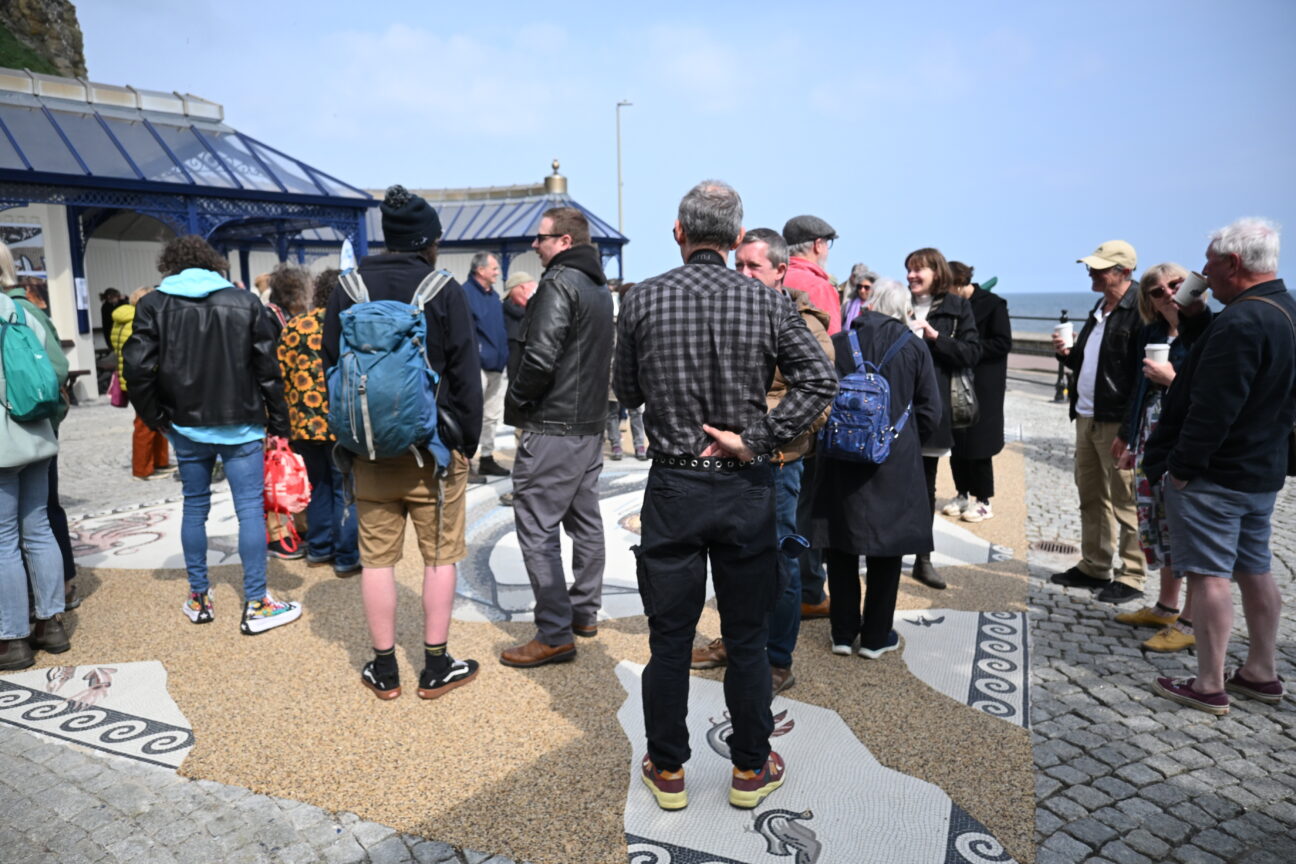
This mosaic is designed for a longer and quieter life, but in many ways the aims are the same, to connect people to their history and their surroundings and, crucially, help them feel it. Locals and tourists alike.
For most of us, the draw to nature starts with some animal or representation that makes us feel good. Be it Alice Cooper’s snake, Winnie the Pooh’s sticks or Kermit the frog, there is always a favourite. Art can be the gateway into the world of nature. Once there, art helps keep us there, makes us curious until eventually we become part of the voice that calls conservation.
The Launch of Art and Nature
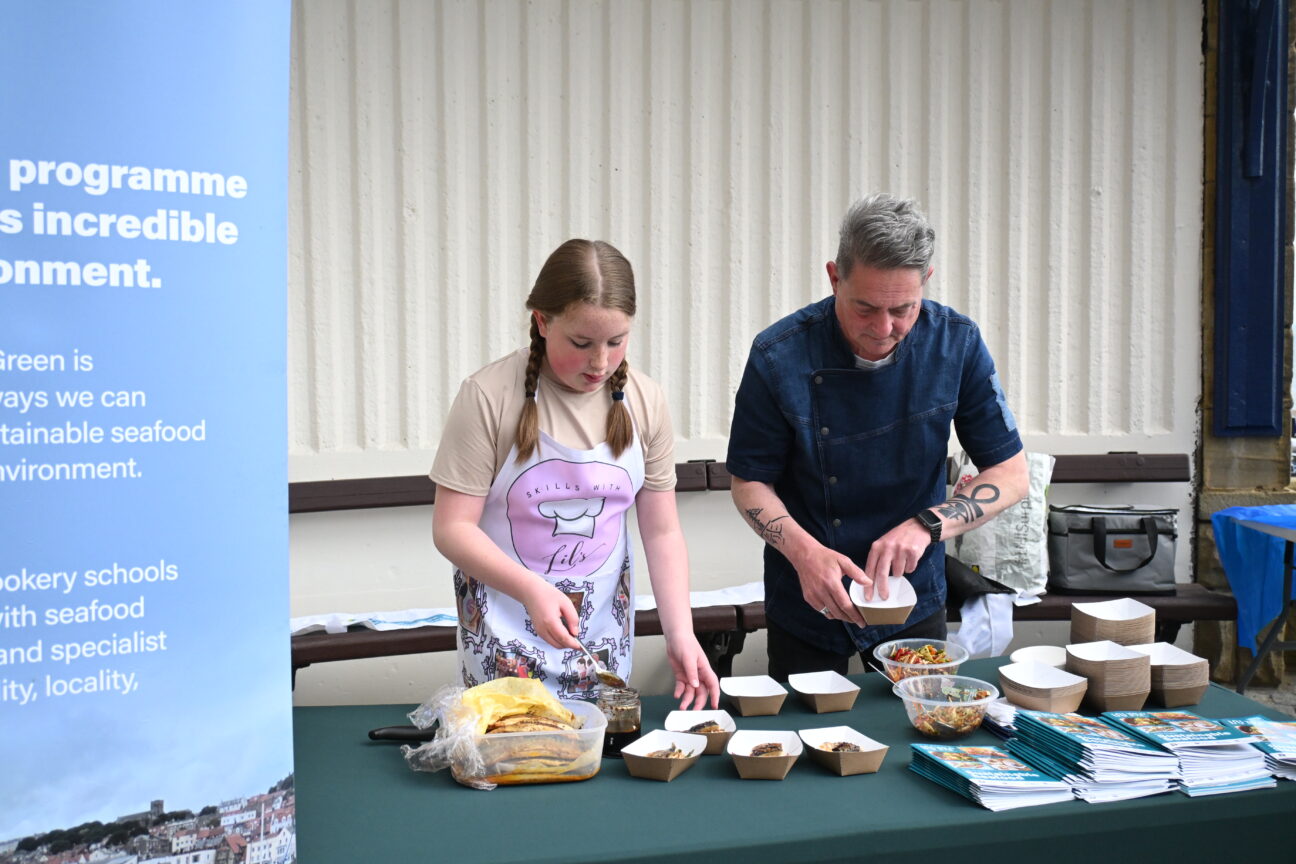
Saturday 26th April 2025 was when it all came together. A good crowd assembled, before, during and after the launch. There were mosaic making sessions and free tea and coffee too. Also, there were samples of delicious sustainable seafood to be had from Wild Eye collaborator Rob Green and his team. Cate and Carmen from YWT had also brought along a selection of bones and fossils. In the photo below we can see them with a Risso Dolphin skull from Scotland.

More than art – A legacy for nature
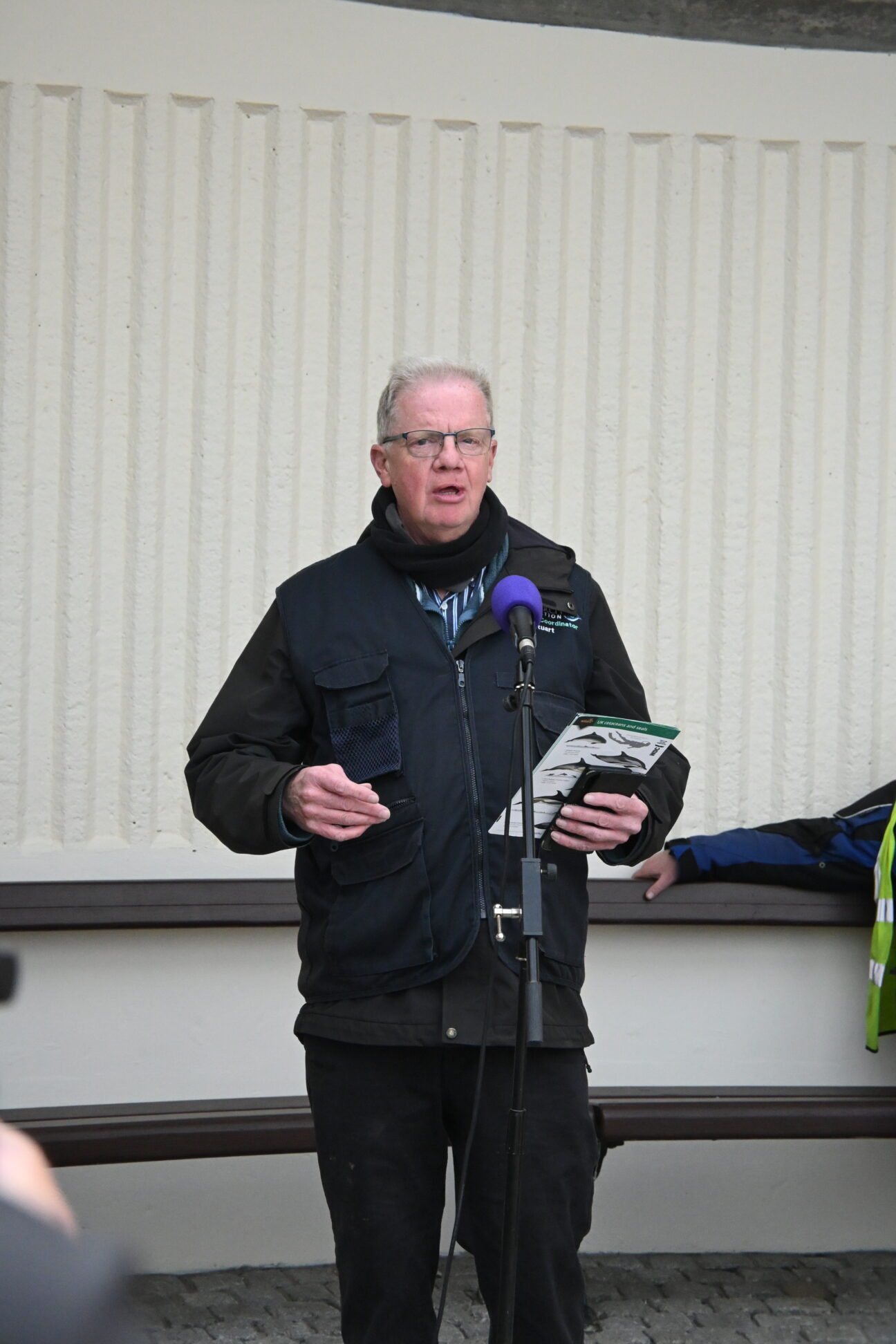
Wild Eye has built something here which doesn’t just exist in isolation. They have caught what used to be called the zeitgeist, but is now known as trending. Cetacean spotting is becoming a much bigger part of what people do when they come to Scarborough, even if they don’t see anything. Reports of bottlenose dolphins, on the Scarborough Porpoise Facebook page, run by Stuart Baines a YWT volunteer and member of Sea Watch Foundation have been on the increase. There have been over 400 sightings in the last year alone along with many more of harbour porpoises and also of three species of whale. This has led to Stuart’s Facebook page gaining upwards of 100,000 followers.
It isn’t just cetaceans, Scarborough is also home to one of the largest breeding colonies of common seals in the UK. We also see this trend in the growing popularity of Ana Cowie’s YWT Shoresearch programme where people are learning to identify and report on the exciting range of wildlife to be found on Yorkshire’s beaches. Wild Eye has simultaneously tapped into this and contributed to it, not least with its lasting legacy of art projects all around Scarborough. Although the Wild Eye project itself is coming to an end, it is not yet finished. There is a sculpture up at the castle that can only be completed by snow. There has been no snow since its installation. As it will rarely be complete, it is likely to become a newsworthy pointer to climate change.
Back to our Seawatching Station – This is now open to the public, the elements and the seagulls 24 hours a day, 7 days a week. It also provides a base for future events run by YWT and others. A real and inspiring legacy for the future.


